
The diet of Sicilian dwarf elephants was predominantly herbivorous
A recent interdisciplinary study conducted by researchers from the Department of Geosciences, the Department of Biology, and the Museum of Nature and Humankind of the University of Padova, in collaboration with the Institute of Geosciences and Earth Resources (CNR), the Department of Earth Sciences of the University of Zaragoza, and the Catalan Institute for Palaeontology of Barcelona, has shed new light on the dietary adaptations of the two Sicilian dwarf elephant species.
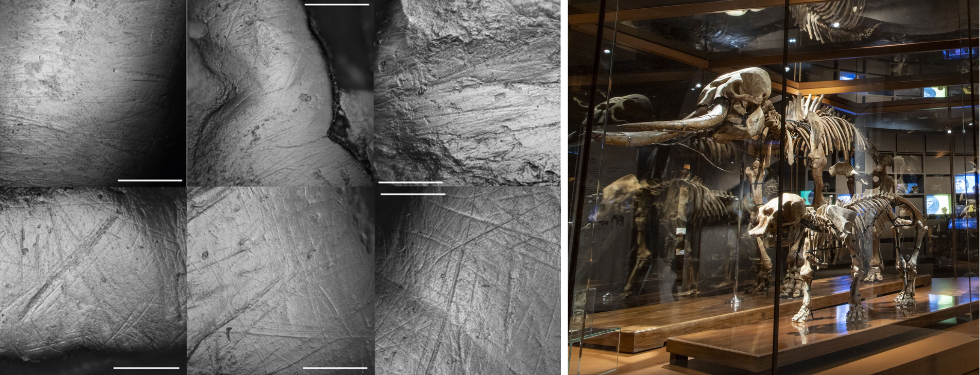
The analysis of dental meso- and micro-wear patterns using enamel surface photomicrographs, laser confocal microscopy, and optical profilometry revealed the feeding strategies of Palaeoloxodon falconeri (early Middle Pleistocene) and P. mnaidriensis (late Middle to Late Pleistocene), both of which evolved from the ancestral straight-tusked elephant Palaeoloxodon antiquus. This study has shown that both species underwent a similar dietary shift, from a mixed plant-based diet to predominantly grazing, as a response to differing adaptive pressures.
It is the first time that a hypothesis about their diet has been made thanks to the analysis, on specimens present in the Geology and Paleontology section of the Museum of Nature and Humankind (MNU) of the University of Padua, of dental wear produced by the food consumed by the animal."
“P. mnaidriensis was probably driven by competition with other large herbivores present on the island and by the spread of grassland environments. In the case of the smaller P. falconeri, which at the time was the only large mammal in Sicily and therefore had neither predators nor competitors, it was likely the marked insular conditions that led plants to develop greater lignification (the so-called insular woodiness), which accounts for the wear patterns observed in our analyses” explains Prof. Claudio Mazzoli, Professor of the Department of Geosciences.
“The investigation is a great example of modern research based on historical specimens hosted in our Museum. They provide important materials to understand past evolution and environmental adaptation processes. We clearly need this comprehension to face the challenges of the rapid climate changes active right now”, adds Gilberto Artioli, Professor of the Department of Geosciences and scientific director of the Mineralogy section of the Museum of Nature and Humankind.
PRESS INFORMATION
PAPER: Strani F., Rebuffi S., Gialanella M., Demiguel D., Castelli S., Fornasiero M., Artioli G., Dal Sasso G., Mazzoli C., Fusco G., Breda M. (2025) - Feeding strategies of the Pleistocene insular dwarf elephants Palaeoloxodon falconeri and Palaeoloxodon mnaidriensis from Sicily (Italy). Papers in Palaeontology, 11(5), e70036 (DOI: 10.1002/spp2.70036).